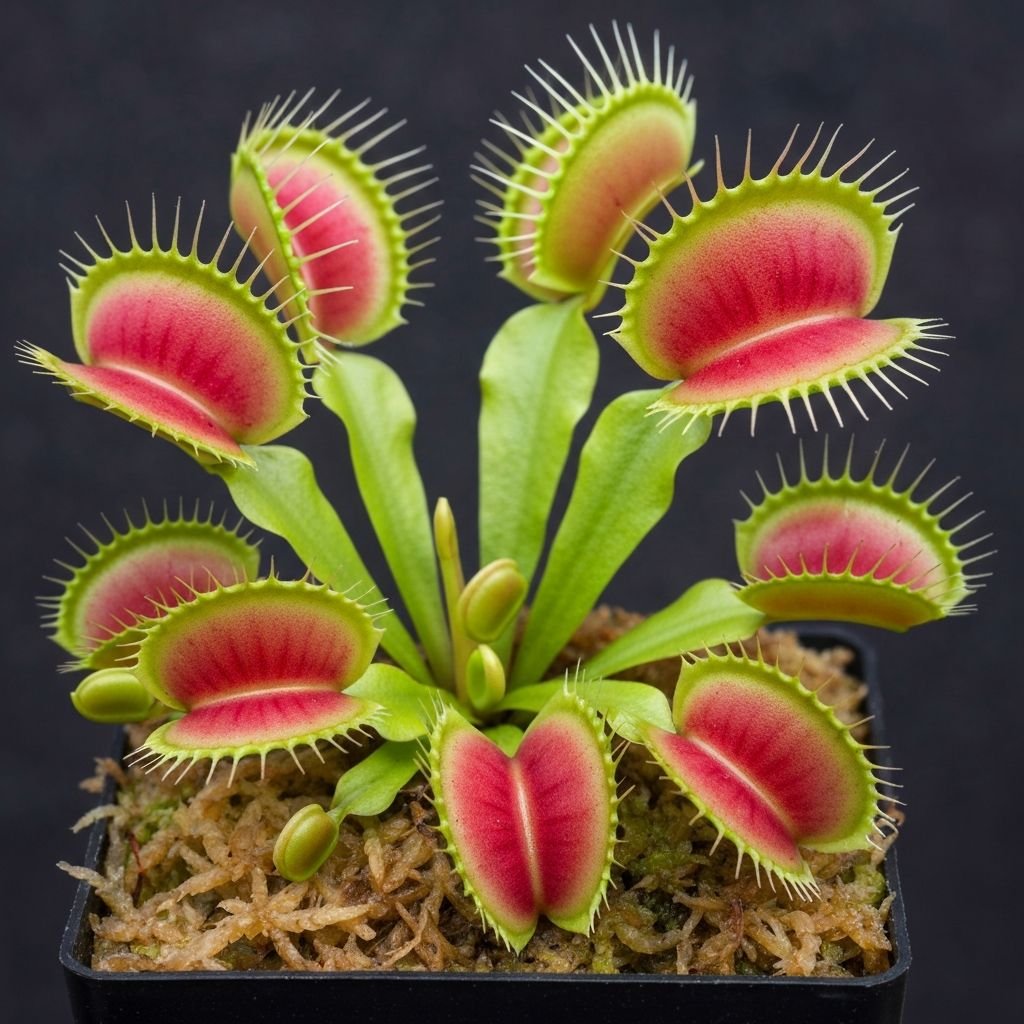
Typical
The classic wild-type form with bright green petioles and vivid red trap interiors. This is the original form found in nature along the Carolina coast.
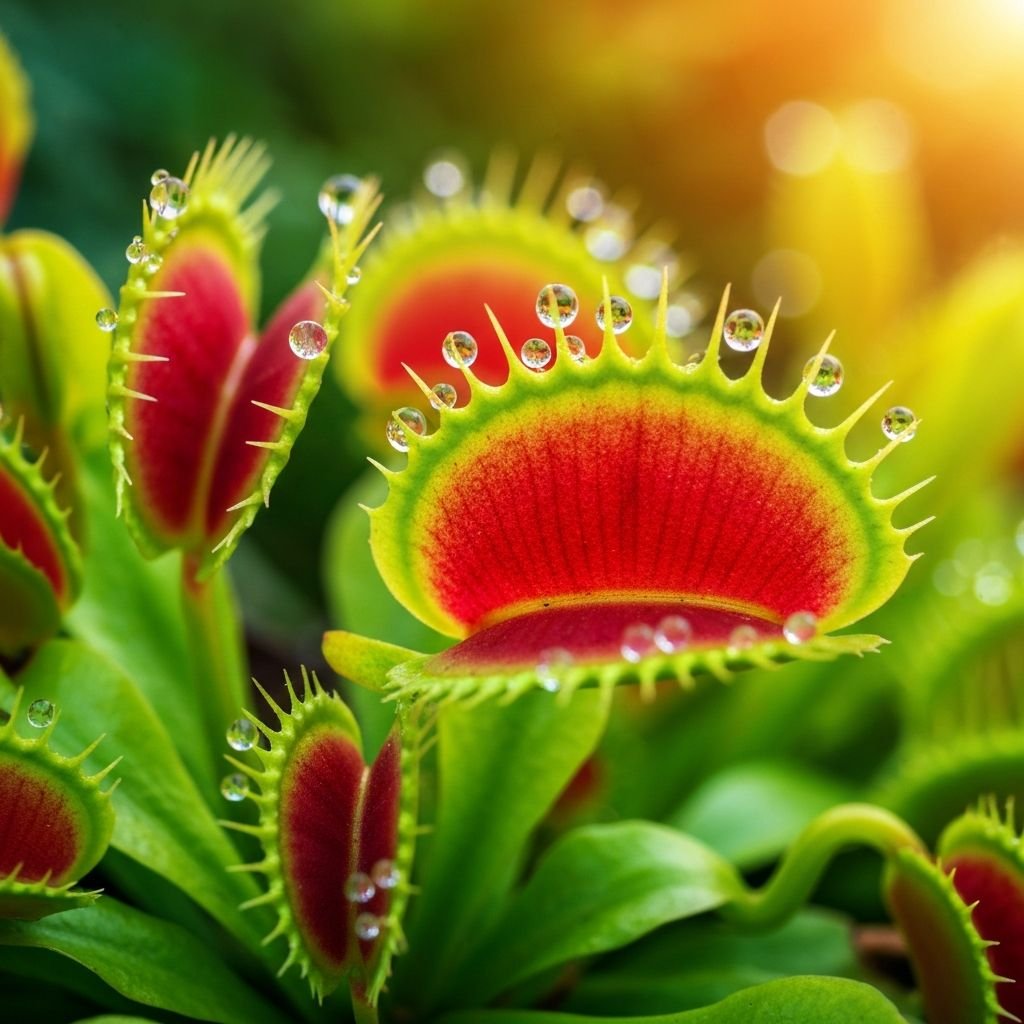
Dionaea muscipula
One of the most extraordinary plants on Earth. A carnivorous marvel that has captivated scientists and enthusiasts for centuries.
Explore the TrapAnatomy
Every part of the Venus flytrap is engineered for one purpose: to lure, capture, and digest its prey.
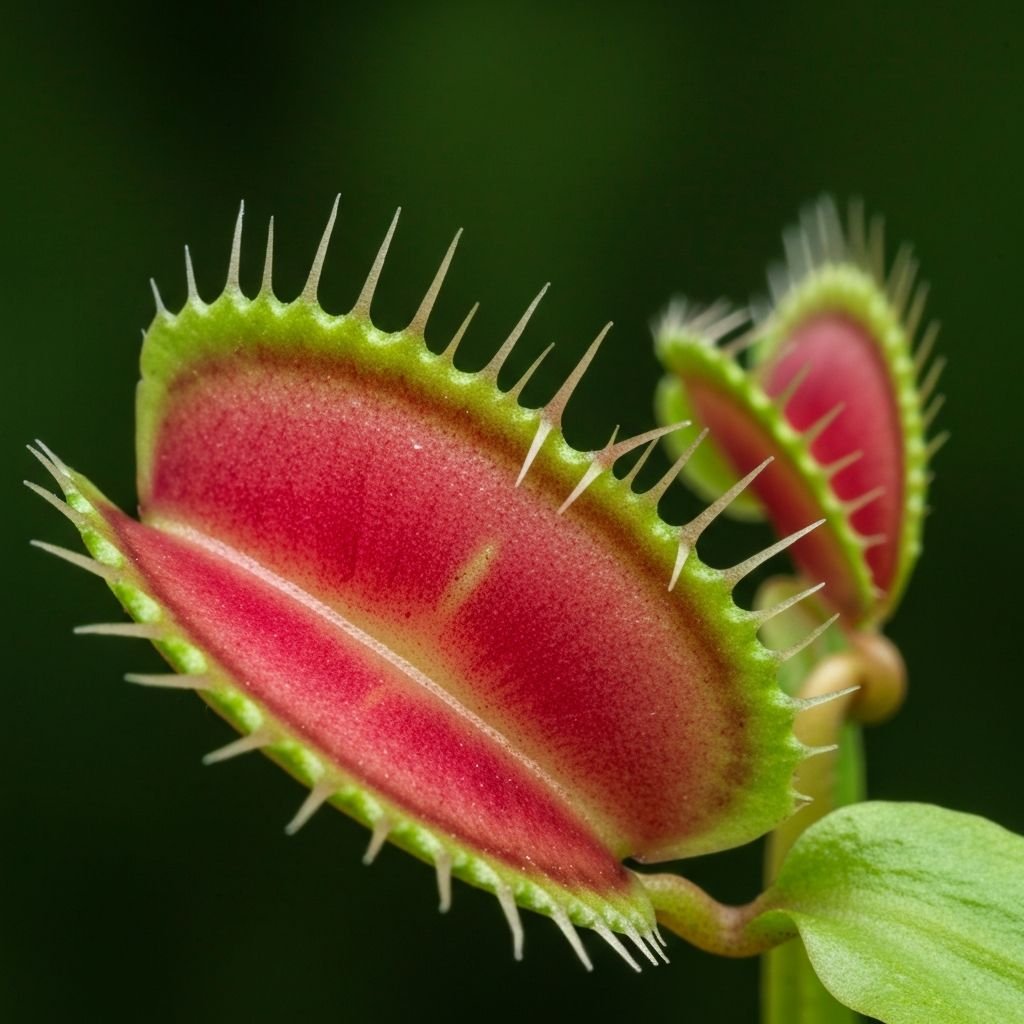
Two hinged lobes form the trap. Each lobe is roughly semicircular and lined with a red interior that secretes nectar to attract prey.
Three to four tiny sensory hairs on each lobe detect movement. Two touches within 20 seconds triggers the trap to snap shut.
Long, finger-like projections (cilia) along the edge of each lobe interlock when closed, preventing larger prey from escaping.
Once sealed, the inner surface secretes enzymes that dissolve the soft tissues of the insect over 5 to 12 days.
The Hunt
The Venus flytrap is one of the fastest-moving structures in the plant kingdom. Here is how the hunt unfolds.
The trap produces sweet nectar along its lobes, enticing insects to land and explore the inviting red surface.
When an insect touches two trigger hairs within 20 seconds, an electrical signal causes the trap to snap shut in under 100 milliseconds.
The interlocking marginal teeth form a cage. As the insect struggles, additional stimulation causes the lobes to press tightly together, forming an airtight seal.
Digestive enzymes flood the sealed chamber, dissolving the soft tissues of the prey. This process takes 5 to 12 days before the trap reopens.
After digestion, the trap reopens to reveal only the exoskeleton. Each trap can perform this cycle 3 to 5 times before it withers and is replaced.
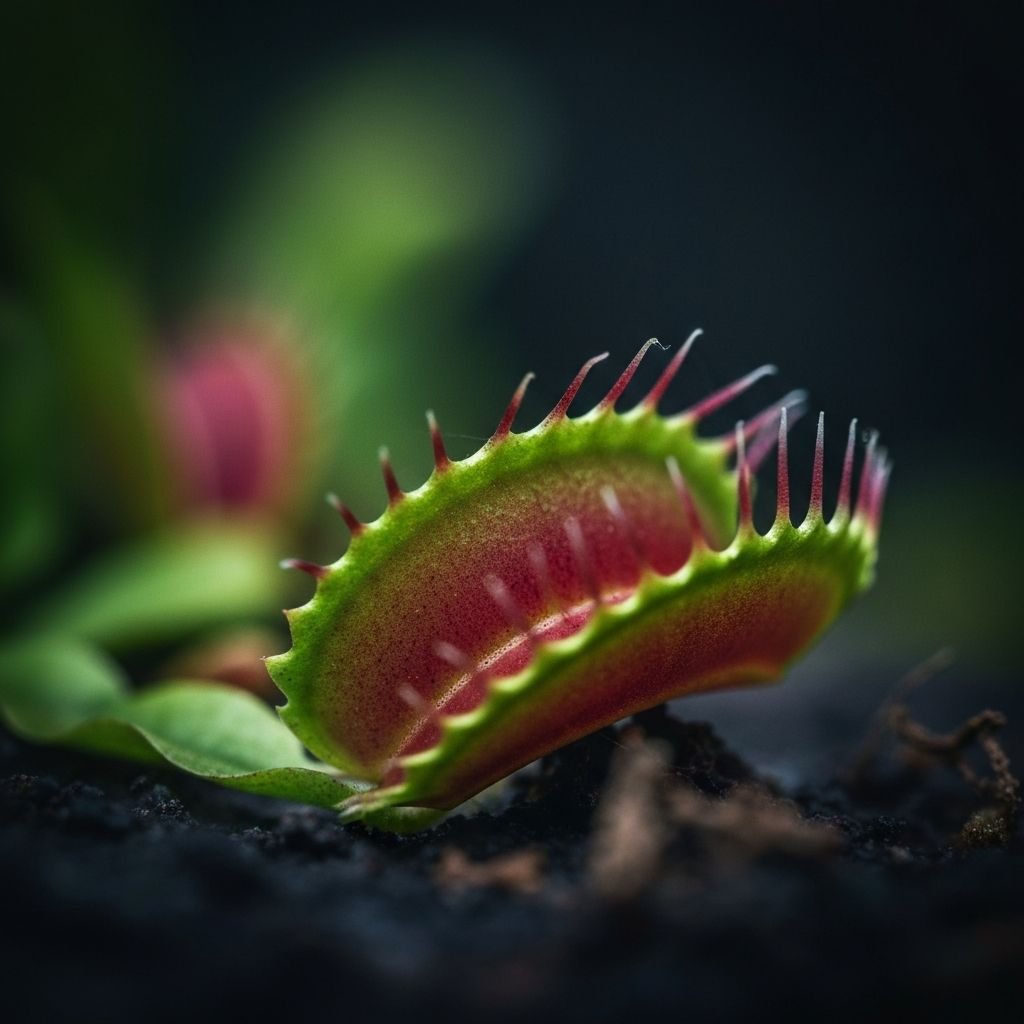
Natural Habitat
Venus flytraps are found naturally in only one place on the entire planet: the coastal bogs of North and South Carolina.
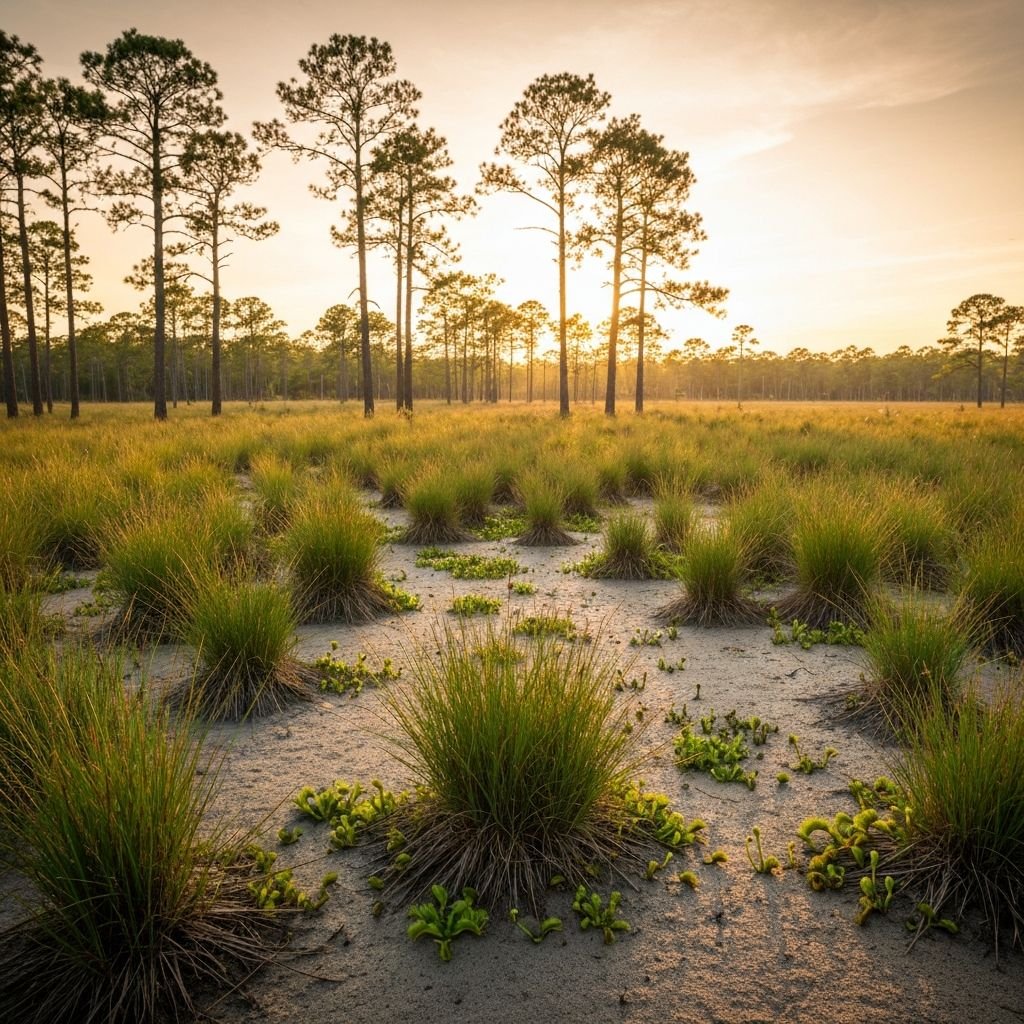
Native Range
Within a 75-mile radius of Wilmington, North Carolina
Ecosystem
Longleaf pine savannas and wet sandy bogs
Soil Type
Acidic, nutrient-poor, sandy, waterlogged
Conservation
Vulnerable - poaching and habitat loss are major threats
Cultivars & Variations
While there is only one species of Venus flytrap, growers have developed dozens of unique cultivars with striking differences in color, size, and trap shape.
The classic wild-type form with bright green petioles and vivid red trap interiors. This is the original form found in nature along the Carolina coast.
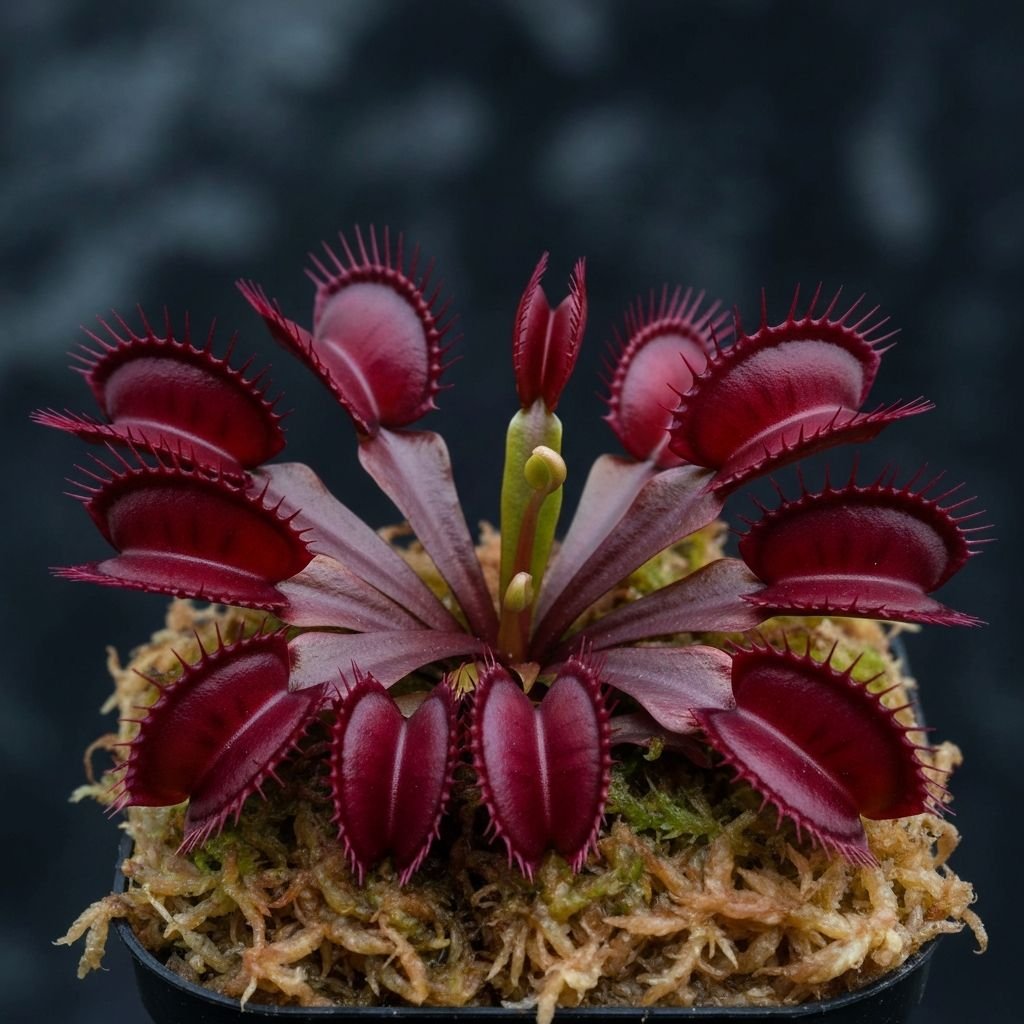
One of the most popular cultivars, prized for its deep burgundy-to-maroon coloring that covers the entire plant when grown in full sun.
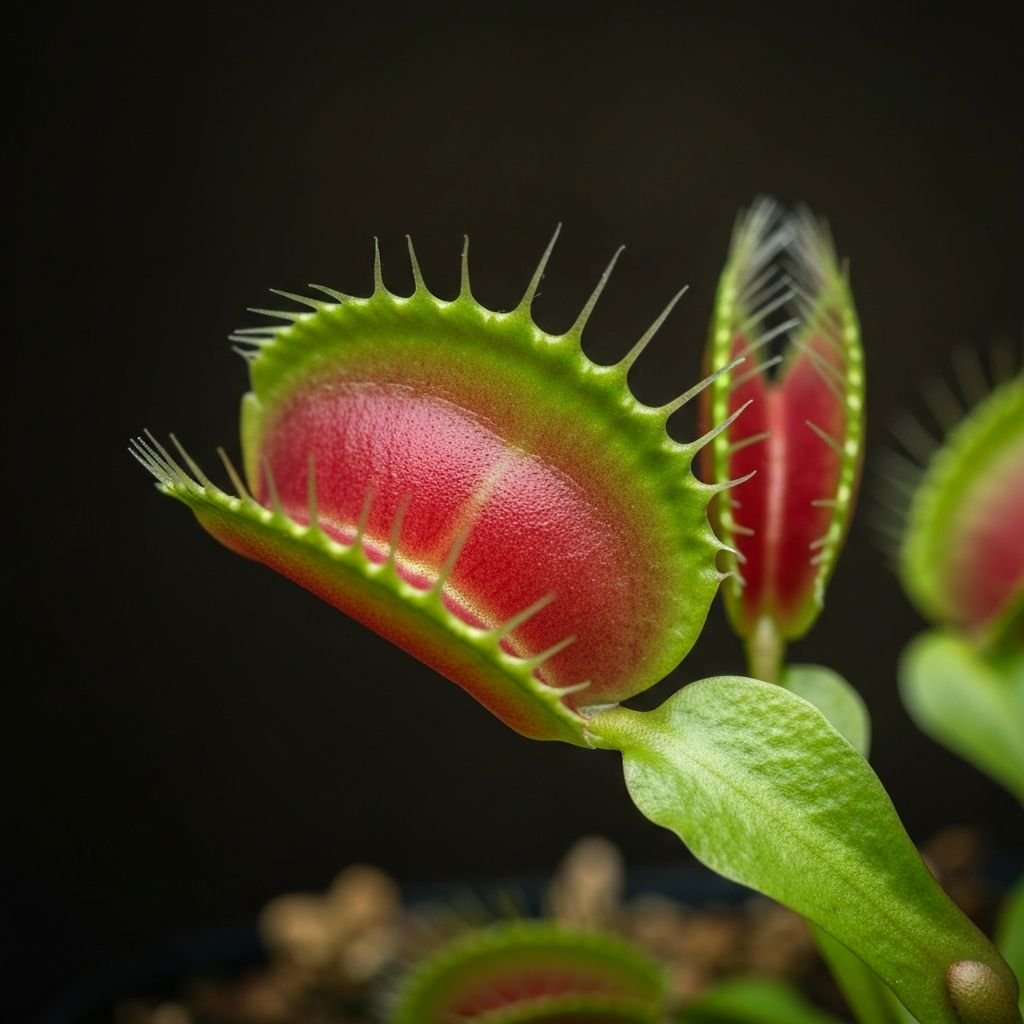
A giant clone famous for producing some of the largest traps of any cultivar, regularly exceeding 2 inches. A vigorous and fast grower.
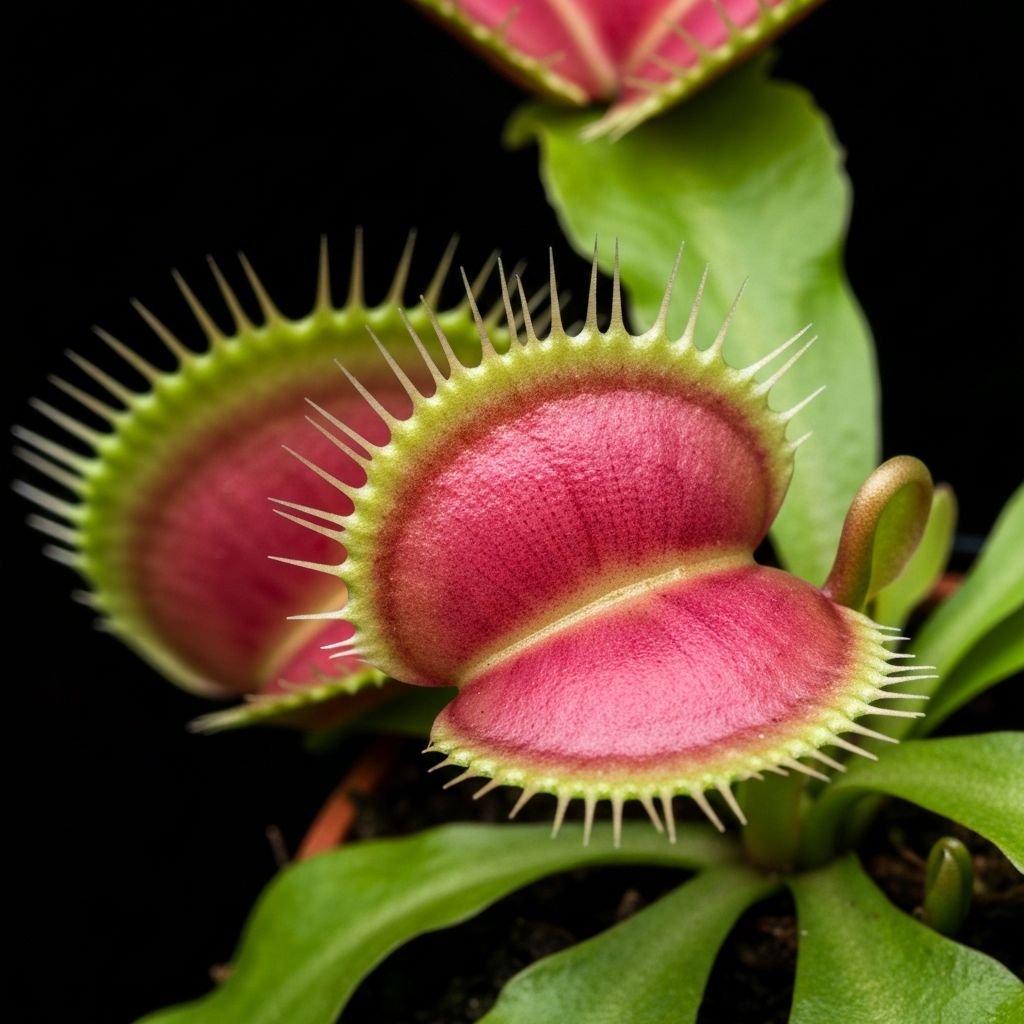
Named for the Italian word for teeth, this cultivar features short, triangular teeth instead of the typical long cilia, giving it a sawtooth appearance.
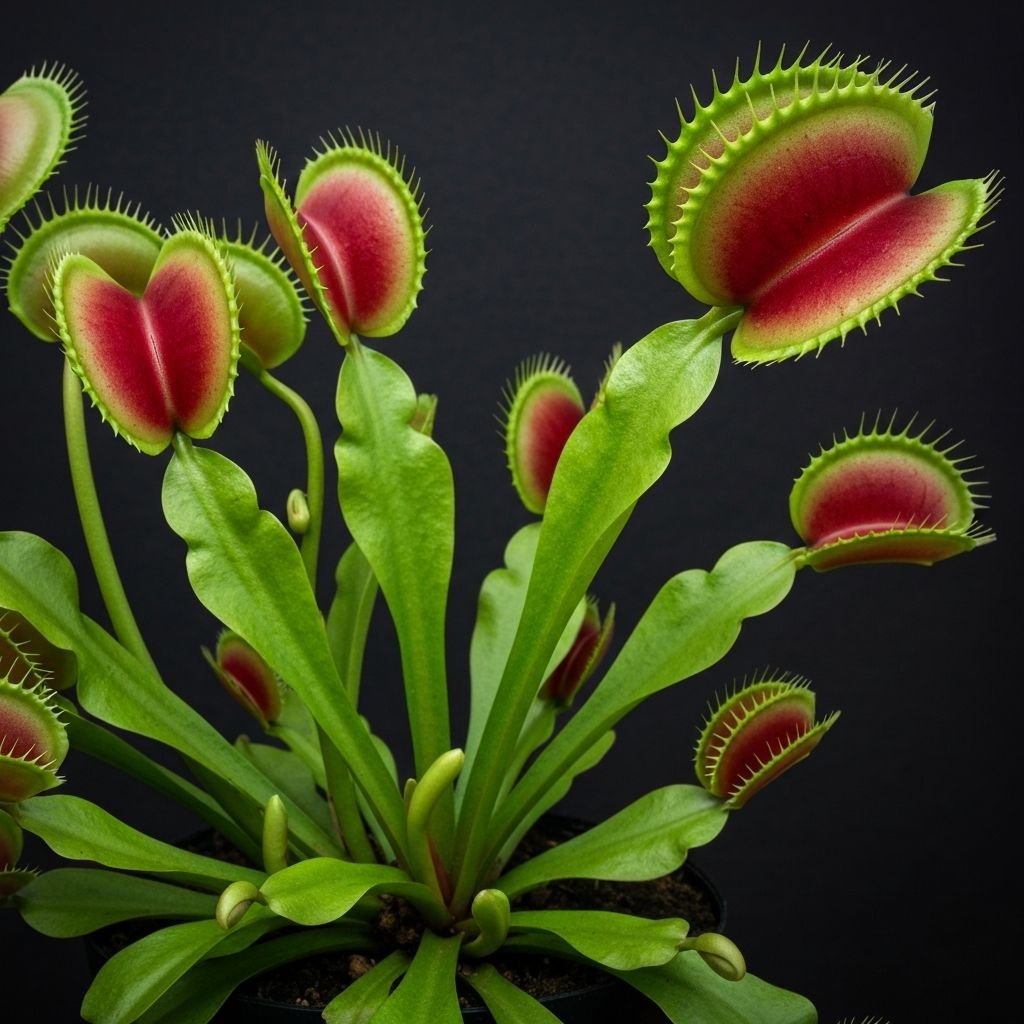
A robust cultivar known for its upright growth habit and large number of traps. Produces thick petioles and deep red trap interiors.
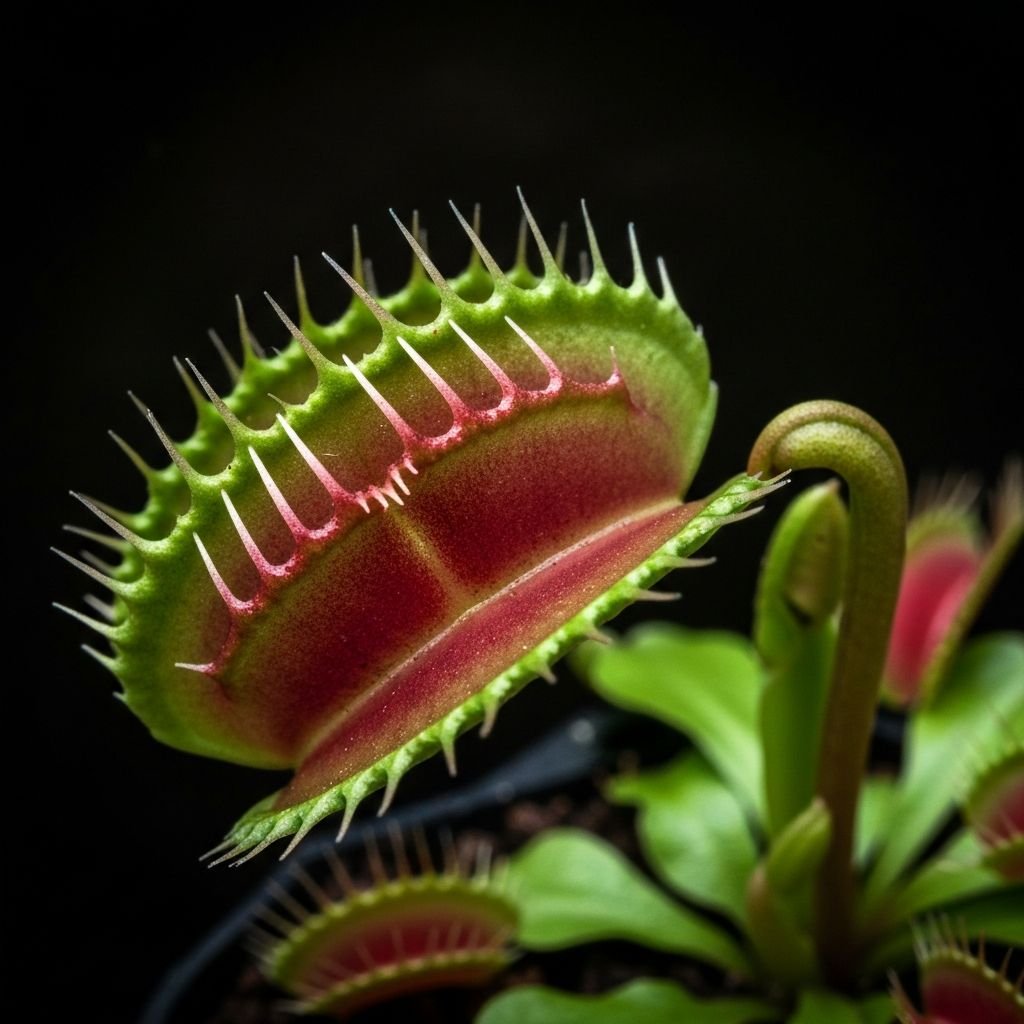
A bizarre mutant cultivar with irregularly fused teeth that create jagged, uneven trap margins. No two traps look exactly alike.
Care Guide
Venus flytraps are not difficult to grow, but they have very specific requirements that differ from typical houseplants.
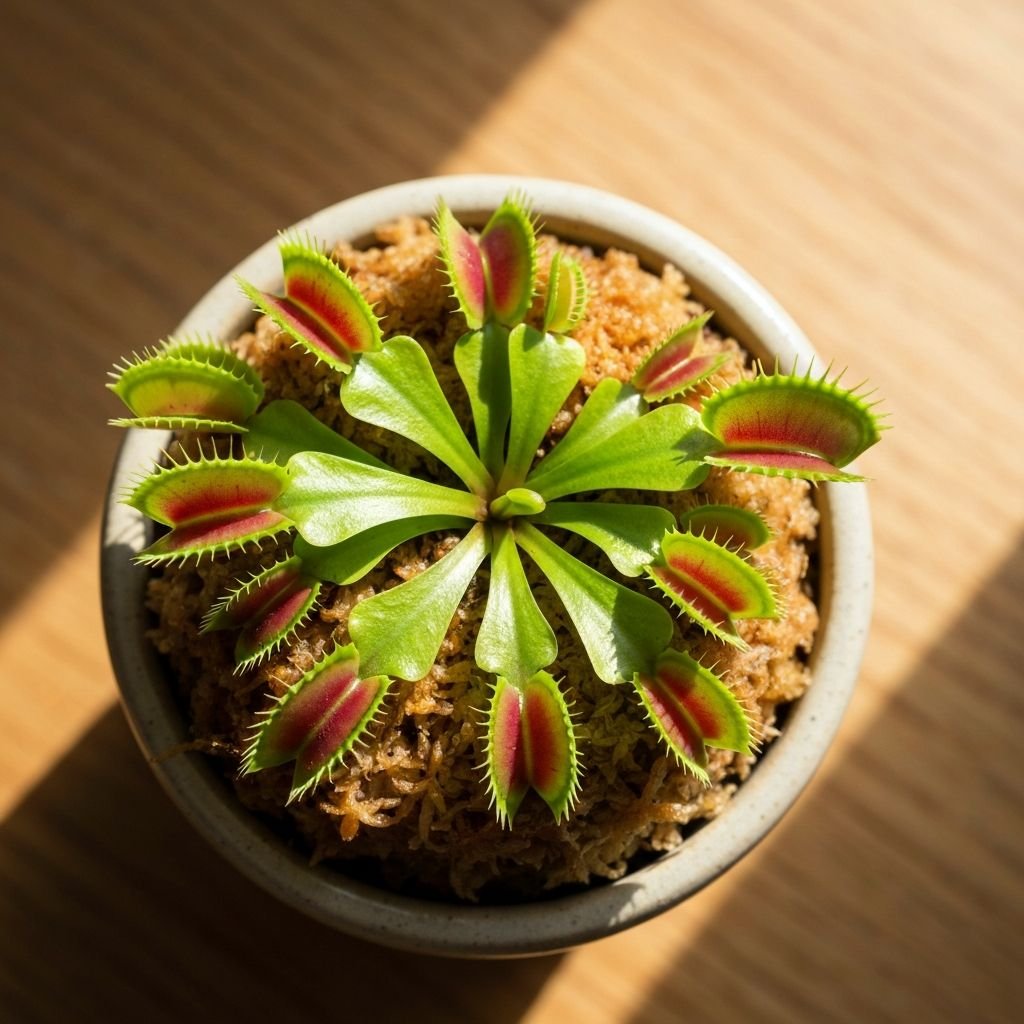
Provide at least 6 hours of direct sunlight daily. A sunny south-facing windowsill or outdoor growing works best.
Use only distilled, reverse osmosis, or rainwater. Tap water minerals will kill the plant over time.
Venus flytraps require 3 to 4 months of cold dormancy (35-50 F / 2-10 C) each winter to survive long-term.
Use a mix of peat moss and perlite (1:1). Never use regular potting soil or add fertilizer.
Outdoors, the plant catches its own food. Indoors, you can feed it a small insect once a month if needed.
Avoid poking the traps for fun. Each trap has a limited number of closes before it dies and must be replaced.
FAQ
Everything you ever wanted to know about these remarkable carnivorous plants.